Understanding Grocery Shopping and Balanced Food Selection
An educational resource exploring practical approaches to selecting food items in everyday shopping contexts. This platform provides neutral information about grocery shopping patterns, food categories, and general nutrition concepts within the United Kingdom context.
Educational content only. No medical services. No promises of outcomes.
Shopping Categories Overview
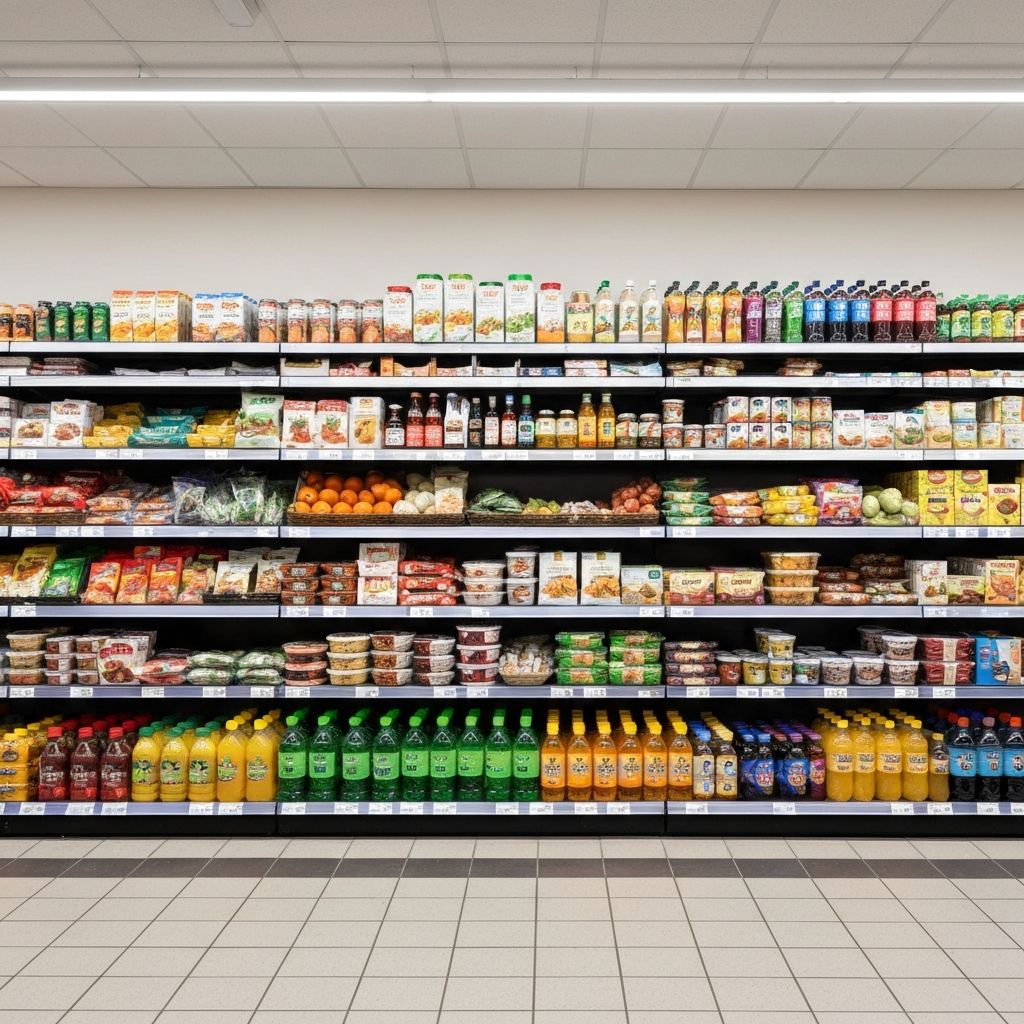
Supermarkets in the United Kingdom typically organise food products into several broad categories. Understanding these categories can provide context for how food items are grouped and displayed in retail environments.
Common food groups found in supermarkets include fresh produce such as vegetables and fruits, dairy products including milk and cheese, protein sources like meat and fish, grain-based products such as bread and pasta, and packaged goods that may include various processed items.
The organisation of these categories varies by store format, size, and regional preferences. Larger supermarkets may have more extensive sections dedicated to specific food groups, while smaller shops might combine categories differently.
Each category typically contains a range of products with different characteristics, packaging sizes, and price points. Shoppers encounter these organised sections as they navigate through the store layout.
Reading Labels Basics
Food packaging in the United Kingdom includes various types of information that describe the contents of the product. This information typically appears on labels and includes ingredients lists, nutritional data, and other regulatory disclosures.
Nutritional labels commonly display values for energy content, fat, carbohydrates, protein, and salt. These values are usually presented per 100 grams or per serving, allowing for comparison between different products.
Ingredients lists show the components of a product in descending order by weight. This means the ingredient present in the largest amount appears first, and the one in the smallest amount appears last.
Understanding how to read these labels is a practical skill that can inform shopping decisions. However, individual nutritional needs vary significantly, and label information should be considered within the context of overall dietary patterns rather than in isolation.
Additional information on packaging may include allergen warnings, storage instructions, and date markings. These elements provide context about the product's characteristics and proper handling.
Typical Grocery Basket Examples
Different shoppers select different combinations of food items based on various personal factors. The following examples illustrate some common patterns observed in everyday grocery shopping contexts, presented purely for educational observation.
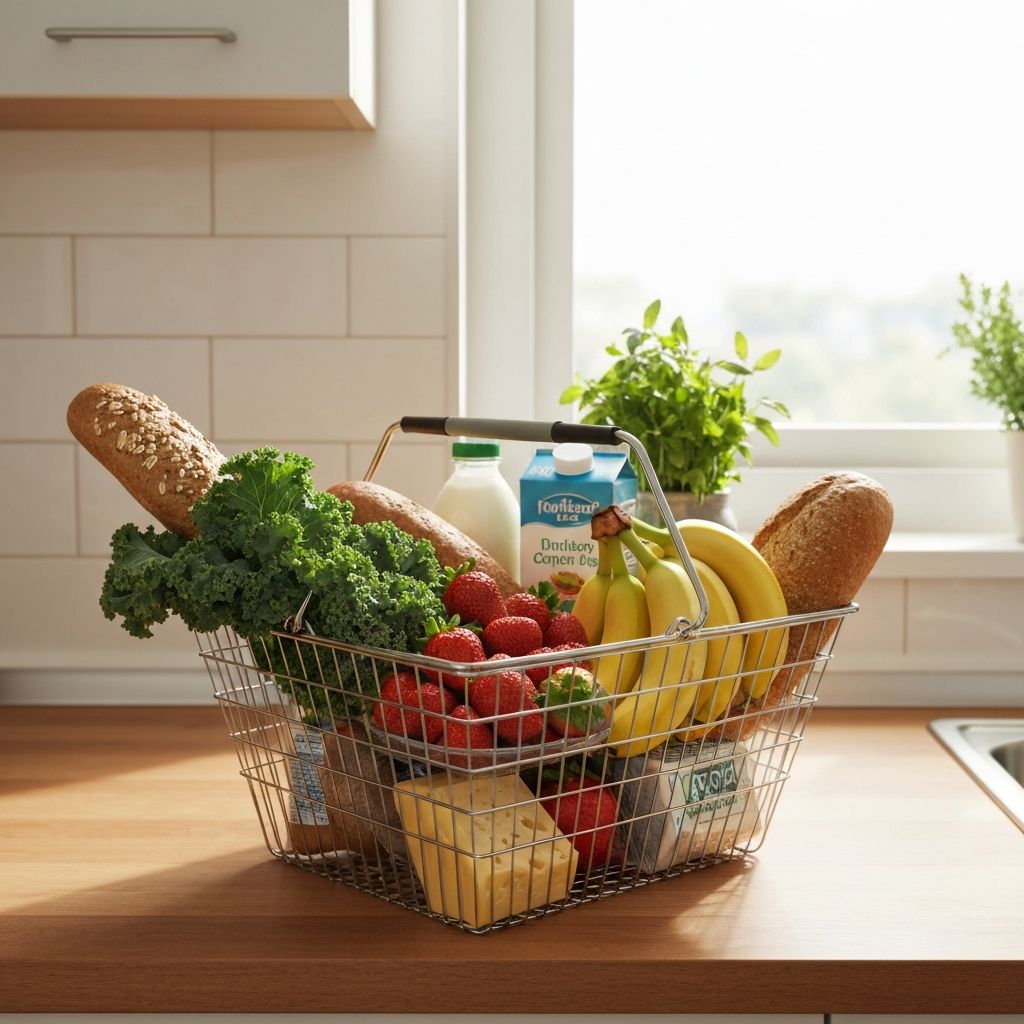
Example Basket One
This basket contains a selection of fresh vegetables including leafy greens and root vegetables, several types of fruit, whole grain bread, dairy products, and some packaged pantry items. This represents one possible combination of food categories that some shoppers might select.

Example Basket Two
This basket shows a different selection pattern, with emphasis on fresh produce, some protein sources, grain products, and minimal processed items. The composition reflects another approach to selecting items across various food categories.
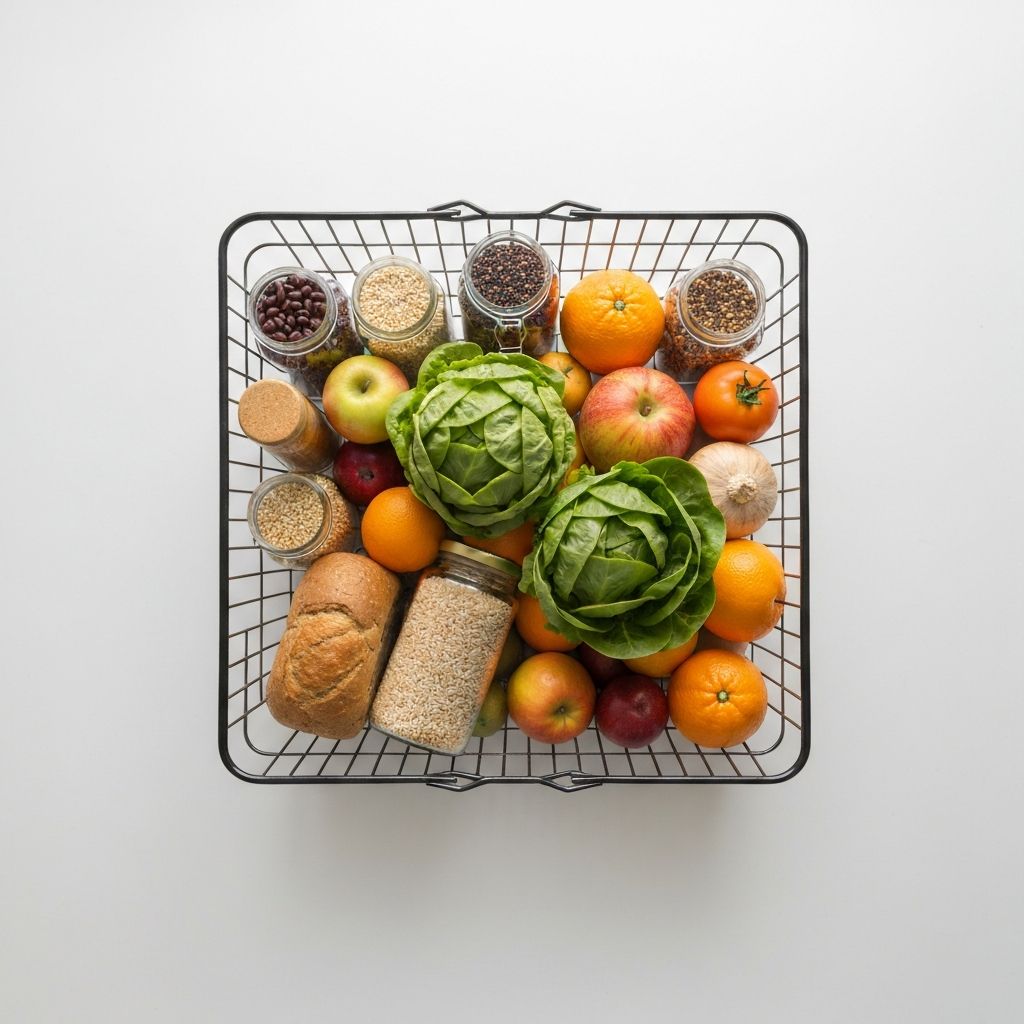
Example Basket Three
This basket demonstrates yet another selection pattern, incorporating a mix of fresh and packaged items from multiple food groups. Each basket example shows how different combinations of products might appear in typical shopping scenarios.
These examples are provided solely for illustrative purposes to demonstrate the variety of product combinations that exist in grocery shopping contexts. They do not constitute recommendations or suggestions for specific purchases.
Budget and Planning Context

Many shoppers engage in some form of planning before or during their grocery shopping trips. This planning can take various forms, from written lists to mental notes about items needed at home.
Budget considerations often play a role in shopping decisions. Food prices vary across different products, brands, and store locations. Shoppers may compare prices, look for offers, or select different package sizes based on their financial considerations.
The frequency of shopping trips also varies among individuals. Some people prefer to shop weekly, purchasing larger quantities at once, while others may shop more frequently for smaller amounts. These patterns can be influenced by storage capacity, proximity to shops, and personal schedules.
Planning approaches can include considering which meals might be prepared in the coming days, checking what items are already available at home, and thinking about upcoming events or activities that might affect food needs.
There is no single correct approach to shopping planning. Different methods work for different people based on their individual circumstances, preferences, and constraints.
Lifestyle Factors in Shopping
Various lifestyle factors can influence grocery shopping patterns and food selection. These factors are diverse and highly individual, varying significantly from person to person.
Work schedules and daily routines may affect when and how often people shop for groceries. Those with regular daytime working hours might shop during evenings or weekends, while others with different schedules might shop at various times.
Household size and composition influence the quantities and types of products purchased. A single person typically purchases different amounts than a family household, and the presence of children or elderly household members may affect product selection.
Physical activity levels and daily movement patterns exist on a spectrum. Some individuals engage in regular structured exercise, others have physically active occupations, and some lead more sedentary lifestyles. These varying activity patterns may influence food selection in different ways for different people.
Cultural background and food traditions often shape preferences and familiarity with certain types of food. The diverse population of the United Kingdom includes people with connections to many different culinary traditions.
Geographic location within the UK can also play a role, as the availability of certain products and types of shops varies between urban and rural areas, and across different regions.
Educational Blog Articles
Explore additional educational content on specific topics related to grocery shopping and food selection.
Frequently Asked Questions
What is this website about?
This website provides educational information about grocery shopping and food selection in the United Kingdom. It explains concepts related to shopping patterns, food categories, and general nutrition context. The content is purely informational and educational in nature.
Does this website provide nutritional advice?
No. This website does not provide personalised nutritional advice, dietary recommendations, or health guidance. The content presents general educational information about grocery shopping and food categories for learning purposes only.
Who should use the information on this website?
The information is presented as general educational content about grocery shopping contexts in the UK. It is intended for anyone interested in learning about these topics. It does not replace professional advice or personal decision-making.
How often is the content updated?
The educational content on this website is periodically reviewed to ensure it remains relevant and accurate as an informational resource about grocery shopping practices in the United Kingdom.
Is this website affiliated with any shops or brands?
No. This website is an independent educational resource. It is not affiliated with any supermarkets, food brands, or commercial entities. The content is neutral and informational.
Explore More Educational Content
Continue learning about grocery shopping and food selection topics through our educational blog articles and informational resources.
View Educational BlogLimitations and Context
The information presented on this website is educational in nature and intended to explain general concepts related to grocery shopping and food categories.
This content does not constitute personalised advice, recommendations, or guidance for individual circumstances. Nutritional needs and appropriate food choices vary significantly between individuals.
This website does not provide medical, dietary, or health services. For personalised nutrition guidance or health concerns, consult qualified professionals such as registered dietitians or healthcare providers.
The diversity of approaches to food selection and grocery shopping is acknowledged. The information presented represents general educational context rather than prescriptive recommendations.